


Colombian Coffee: Regions, Flavor Profiles, and How to Choose the Ideal One (2026)
A complete guide to Colombian coffee: regions, flavor profiles, altitude, roasting, and brewing methods. Learn how to choose the ideal coffee for your taste.
SINGLE-ORIGIN COFFEES
Mario S.
1/25/202620 min read
What Makes Colombian Coffee Unique
Colombian coffee has earned global recognition not by chance, but due to exceptional geographical and climatic conditions. Colombia is located in the equatorial zone, where the combination of high altitude, mineral-rich volcanic soil, and two annual harvest seasons creates ideal conditions for producing high-quality Arabica.
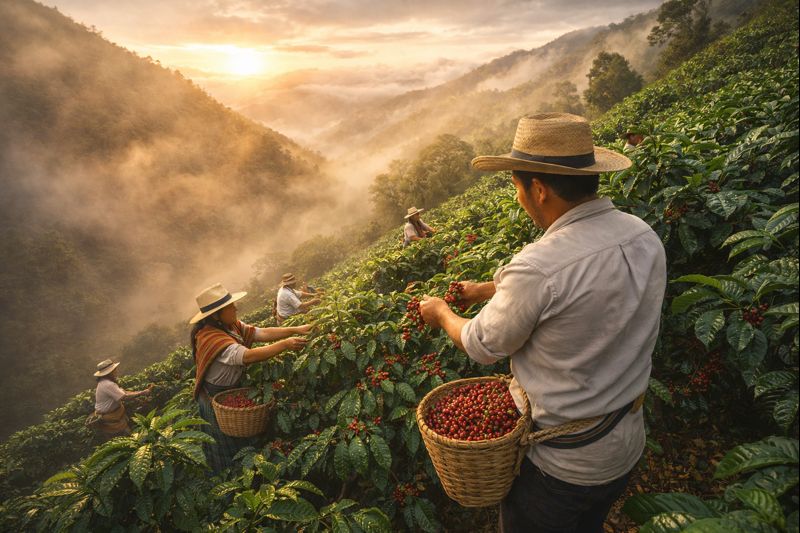
Unlike countries that produce coffee in vast mechanised plantations, Colombia maintains a tradition of family production in small farms situated on the mountainous slopes of the Andes. This rugged geography necessitates manual and selective harvesting, where only ripe fruits are picked, ensuring better final quality.
The Caturra and Castillo varieties dominate Colombian plantations, developed specifically to resist diseases such as coffee rust while preserving desirable flavour characteristics. The washed processing method, predominant in the country, enhances the bright acidity and flavour clarity that characterises Colombian coffees.

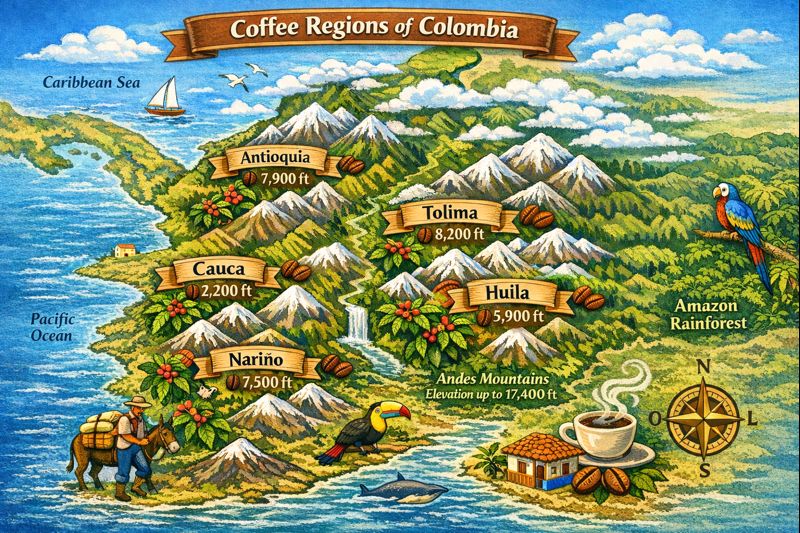
Main Coffee Regions of Colombia
Huila: Vibrant Acidity and Fruity Notes
Huila is currently the largest coffee-producing region in Colombia, accounting for around 20% of national production. Located in the southwest of the country, it benefits from altitudes ranging from 1,200 to 2,100 metres, tropical climate, and exceptionally fertile volcanic soils.
Huila's coffees are characterised by pronounced and bright acidity, medium to full body, and notes ranging from red fruits (strawberry, cherry) to caramel and chocolate. The region has gained international recognition through competitions such as the Cup of Excellence, where Huila producers frequently occupy top positions.
The variety of microclimates within Huila allows for astonishing diversity. Coffees from higher altitudes tend to present greater complexity and more refined acidity, while lots from lower areas offer greater sweetness and a more present body.
Antioquia: Tradition and Balance
Antioquia, a region that includes the famous department of Medellín, represents Colombian coffee tradition. With altitudes between 1,300 and 1,650 metres, it produces coffees known for their harmonious balance of acidity, sweetness, and body.
The typical profile of Antioquia features pleasant medium acidity, silky body, caramel sweetness, and notes of milk chocolate and almonds. This balance makes the coffees from this region particularly versatile, working well in both filtered extraction methods and espresso.
The region benefits from well-distributed rainfall and stable temperatures, allowing for consistent maturation of the fruits. Many family-owned estates in Antioquia have maintained traditional practices for generations, combining ancestral knowledge with modern processing techniques.
Nariño: Extreme Altitude and Complexity
Situated in the extreme south of Colombia, on the border with Ecuador, Nariño stands out for its extreme altitudes, with coffees grown between 1,500 and 2,300 metres. This high altitude, combined with proximity to the equator, results in coffees of extraordinary complexity.
Nariño coffees are recognised for their vibrant and complex acidity, light to medium body, intense sweetness, and floral, citrus, and tropical fruit notes. The slow maturation of the fruits at extreme altitude allows for the development of unique sugars and aromatic compounds.
Production in Nariño focuses on small family plots, many with less than two hectares. This reduced scale allows for meticulous care throughout the process, from cultivation to post-harvest processing.
Tolima: Versatility and Innovation
Tolima, located in central Colombia, is noted for its versatility of profiles and increasing experimentation with processing methods. With altitudes between 1,200 and 1,900 metres, the region produces coffees that range from traditional profiles to bold experiments.
The classic profile of Tolima features balanced acidity, medium body, prominent sweetness, and notes of stone fruits (peach, apricot), chocolate, and soft spices. In recent years, Tolima producers have experimented with controlled fermentation and natural processing, creating more exotic profiles.
The region benefits from diverse microclimates created by the central Andes mountain range and the valleys of the Magdalena and Cauca rivers. This diversity allows producers to cultivate different varieties and experiment with varied techniques.
Cauca: Indigenous Heritage and Unique Terroir
Cauca represents one of the oldest coffee-growing regions in Colombia, with a strong presence of indigenous communities that maintain traditional practices. Situated between 1,700 and 2,100 metres in altitude, it produces coffees of distinctive character.
Cauca coffees are characterised by refined acidity, velvety body, pronounced sweetness, and notes of tropical fruits, caramel, and flowers. The volcanic influence in the soil contributes to the perceptible minerality in many lots from this region.
Many producers in Cauca belong to indigenous communities that integrate coffee cultivation with traditional agricultural practices, creating agroforestry systems that preserve biodiversity and promote sustainability.
Comparative Table of Coffee Profiles by Region
Now that you know the main coffee-producing regions of Colombia, the next step is to choose the right coffee for your personal taste.
How to choose Colombian coffee based on your flavour profile
Choosing Colombian coffee is simple when you start from the flavour profile you're looking for.
Use this quick guide:
I want floral and citrus
Choose: coffees from Nariño or Huila, light roast, prepared in V60.
Why it works:
High altitude → vibrant acidity and floral aromas
Light roast preserves citrus notes
V60 enhances clarity and complexity
Typical notes: floral, lemon, orange, tropical fruits
I want chocolate and caramel
Choose: coffees from Antioquia, medium roast, prepared in espresso.
Why it works:
More balanced and sweet coffees
Medium roast develops natural sugars
Espresso intensifies body and sweetness
Typical notes: chocolate, caramel, nuts
Quick summary
Floral and citrus: Nariño or Huila + light roast + V60
Chocolate and caramel: Antioquia + medium roast + espresso
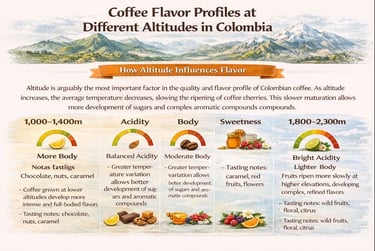
How Altitude Influences Flavour
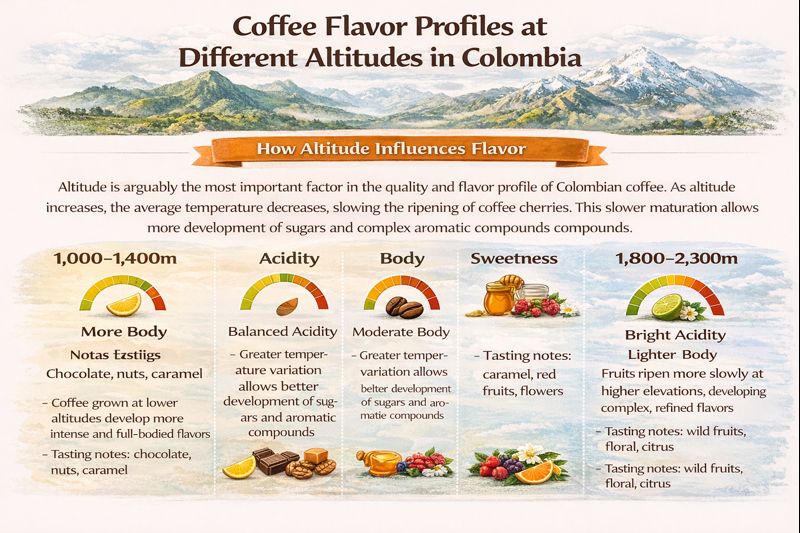
Altitude is perhaps the most determining factor in the quality and flavour profile of Colombian coffee. As altitude increases, the average temperature decreases, slowing the maturation of the coffee fruits. This slower maturation allows for greater development of sugars and complex aromatic compounds.
Coffees grown above 1,600 metres generally exhibit more pronounced and bright acidity, greater aromatic complexity, and more delicate and floral notes. The density of the beans also increases with altitude, resulting in coffee that withstands roasting better and develops more refined flavours.
At lower altitudes (1,000-1,400 metres), coffees tend to have a more pronounced body, milder acidity, and more intense notes of chocolate, nuts, and caramel. While they may have less complexity than high-altitude coffees, they offer pleasant and accessible profiles.
The temperature variation between day and night (thermal amplitude) at high altitude also contributes to superior quality. During the day, photosynthesis produces sugars; during the cold night, the plant's metabolism slows, preserving these sugars in the developing fruits.
Methods of Processing Colombian Coffee
Washed Processing
Washed processing is the traditional and most common method in Colombia, accounting for approximately 85% of production. After harvesting, the ripe fruits are mechanically depulped, removing the skin and part of the mucilage. The beans still covered with mucilage are then fermented in tanks of water for 12 to 36 hours.
This fermentation breaks down the remaining mucilage, which is then removed through washing with clean water. The beans are then dried on drying patios or in greenhouses until they reach the ideal moisture of 10-12%.
Washed processing accentuates the coffee's natural acidity, provides clarity of flavour, and allows the terroir's characteristics to express themselves distinctly. Colombian washed coffees are recognised for their clean cup and well-defined profiles.
Natural and Honey Processing
Although less traditional in Colombia, natural processing (dried whole fruits) and honey (dried beans with partial mucilage) have gained popularity among producers seeking to differentiate their coffees.
In the natural method, ripe fruits are sun-dried whole for 3 to 4 weeks, allowing the sugars from the pulp and mucilage to be absorbed by the bean. This results in coffees with greater sweetness, fuller body, and intense fruity notes.
Honey processing (or semi-washed) removes the skin but retains part or all of the mucilage during drying. Depending on the amount of mucilage preserved (yellow, red, or black honey), the coffees develop different levels of sweetness and body.
These methods require specific climatic conditions during drying and greater attention to avoid unwanted fermentation, but when well executed, they produce notably complex coffees.
How to Identify Quality Colombian Coffee
Certifications and Origin Seals
The "Café de Colombia" seal featuring the image of Juan Valdez is a protected geographical indication that guarantees that the coffee has been grown, harvested, and processed entirely in Colombia. This seal, managed by the National Federation of Coffee Growers of Colombia (FNC), ensures minimum quality standards.
For higher quality coffees, look for specific designations such as "Single Origin" denoting a specific region or estate. Coffees identified as "Microlot" or "Nanolot" represent small and selected lots with exceptional characteristics.
Certifications such as Rainforest Alliance, UTZ, Fair Trade, or Organic indicate sustainable and ethical practices, although they do not necessarily guarantee superior flavour quality. The combination of origin certification with SCA (Specialty Coffee Association) scores above 80 points indicates truly special coffee.
Information on the Packaging
Quality Colombian coffee packaging should include detailed information: specific growing region, altitude, botanical variety, processing method, roasting date, and tasting notes. The more specific the information, the greater the likelihood of transparency and quality.
The roasting date is particularly important. Fresh coffee (roasted less than 4 weeks ago) preserves the volatile aromatic compounds that characterise each origin. Be wary of packaging without a roasting date or simply with an expiry date.
The presence of information about the producer, cooperative, or specific estate demonstrates traceability and appreciation for the farmer's work. Many specialty coffee roasters include stories of the producers, creating a connection between consumer and origin.
Ideal Roast Profiles for Colombian Coffee
Light Roast
Light roast preserves the original characteristics of the terroir and is ideal for appreciating the complexity of high-altitude Colombian coffees. With roast development between first crack and just thereafter, this approach maintains vibrant acidity and intact floral and fruity notes.
Coffees from Nariño and Huila particularly benefit from light roasting, which allows citrus, floral, and red fruit notes to fully express themselves. This roast profile works exceptionally well in filtered extraction methods such as V60, Chemex, or AeroPress.
Light roast requires greater attention during extraction, as the beans are denser and require appropriate water temperature (92-96°C) and grind size to avoid under-extraction. When well prepared, it reveals layers of flavour and aromatic complexity.
Medium Roast
Medium roast represents the balance between preserving origin characteristics and developing sweetness through the caramelisation of sugars. Developed between the first and second crack, this roast is versatile and works well in both filtered methods and espresso.
Coffees from Antioquia and Tolima express themselves well in medium roast, where the natural acidity balances with caramel sweetness and chocolate notes. This profile appeals to diverse palates and allows for appreciation of both the terroir characteristics and roast developments.
Medium roast eases extraction, being more tolerant of small variations in preparation parameters. For those exploring Colombian coffee for the first time, this profile offers an accessible and enjoyable introduction.
Dark Roast - When to Avoid
Although some appreciate dark roast, this profile is not recommended for high-quality Colombian coffees. Roasting beyond the second crack masks the unique characteristics of each region and terroir, resulting in predominantly burnt caramel, smoke, and bitterness flavours.
Specialty coffees from single origin, particularly those with high SCA scores, represent significant investment in careful cultivation and processing. Applying dark roast precisely eliminates the characteristics that justify these coffees' value.
If you prefer more intense and less acidic flavours, opt for medium-dark roast of lower altitude coffees or from regions like Antioquia, maintaining some expression of origin without completely sacrificing the terroir characteristics.
How to Prepare Colombian Coffee Correctly
Espresso Preparation
Colombian coffees produce balanced and complex espressos when prepared correctly. Use a ratio of 1:2 to 1:2.5 (coffee:final drink) – for example, 18g of coffee for 36-45ml of espresso. The ideal extraction time is between 25-30 seconds.
The grind should be adjusted according to the roast profile and freshness of the coffee. Fresher coffees (1-2 weeks after roasting) require a slightly coarser grind than coffees that are 3-4 weeks old. Standard extraction pressure of 9 bars works well for most Colombian coffees.
Coffees from Antioquia and Tolima with medium body and pronounced sweetness work particularly well in espresso and milk-based drinks. The balanced acidity complements the sweetness of the milk without disappearing entirely.
French Press and Cold Brew
The French press highlights the body and texture of Colombian coffees, being ideal for profiles from Antioquia and Cauca with more pronounced body. Use a coarse grind, a ratio of 1:15, and an infusion time of 4 minutes. The presence of natural oils in the final drink enhances a velvety mouthfeel.
For cold brew, Colombian coffees produce a smooth, sweet, and refreshing drink. Use a coarse grind, a ratio of 1:8, and an infusion time of 12-24 hours at room temperature or in the refrigerator. The result is a concentrate that should be diluted with water or milk according to preference.
Cold brew naturally accentuates sweetness and reduces perceived acidity, making it an excellent option for those who prefer less acidic coffee. Coffees from Tolima and Huila produce cold brews with notes of chocolate, caramel, and red fruits.
👉 Check the price of French Press on Amazon
Filtered Extraction Methods
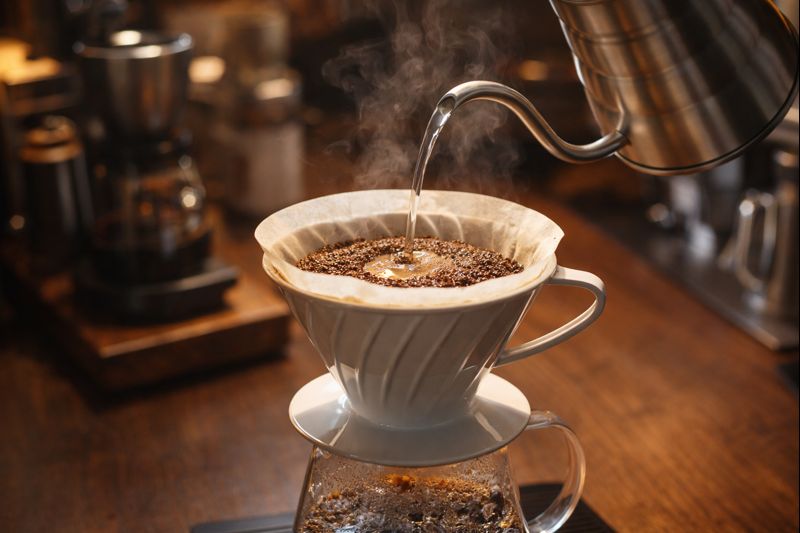
For high-altitude Colombian coffees with pronounced acidity and delicate notes, filtered methods such as pour-over (V60, Kalita Wave), Chemex, or AeroPress are ideal. These methods allow for precise control over extraction variables and produce a clean beverage that highlights clarity and complexity.
Use a ratio of 1:15 to 1:17 (coffee:water), depending on the desired intensity. For 15g of coffee, use 225-255ml of water. The grind should be medium-fine for pour-over, slightly coarser for Chemex. Water temperature between 92-96°C is ideal for light to medium roast.

Common Errors and How to Avoid Them
Inadequate Storage
The most common error in preserving Colombian coffee is inadequate storage. Coffee is hygroscopic (it absorbs humidity) and quickly loses quality when exposed to air, light, heat, or humidity. Never store coffee in the fridge or freezer after opening the packaging.
Use an opaque airtight container, preferably with a one-way valve that allows CO₂ to escape without letting oxygen in. Store in a cool, dry, and dark place. Avoid transferring coffee between containers unnecessarily, as each exposure to air accelerates oxidation.
Buy coffee in quantities that you can consume within 2-4 weeks after roasting. Large packages are economical but result in waste if the coffee loses freshness before complete consumption. For reduced consumption, prefer smaller packages.
Pre-ground Coffee
Grinding coffee in advance is a critical mistake that significantly compromises quality. After grinding, the surface area of the coffee increases exponentially, accelerating oxidation and the loss of volatile aromatic compounds. Ground coffee loses 60% of its aroma in the first 15 minutes.
Invest in a reasonably good grinder (at minimum, a conical burr grinder) and only grind the necessary amount immediately before preparation. The difference in beverage quality justifies the slight inconvenience of grinding with each preparation.
If you absolutely cannot grind before each use, grind enough for a maximum of 2-3 days and store it in a completely airtight container. Even so, the quality will be inferior to freshly ground coffee.
Poor Quality Water
Coffee is 98-99% water, making water quality a determining factor in the final result. Water with chlorine, excessive minerals, or inappropriate pH masks or distorts coffee flavours. Distilled or demineralised water is also inadequate, as the complete absence of minerals results in poor extraction.
Use filtered water with moderate mineralisation. The ideal total hardness is between 50-150 ppm (parts per million) with a pH slightly above 7. If the tap water has a noticeable taste, it will negatively affect the coffee.
Test your water: if you wouldn’t drink it alone, don’t use it for coffee. Activated carbon filtration systems remove chlorine and impurities while maintaining adequate mineralisation. For more dedicated enthusiasts, there are specific water recipes for coffee using added minerals.
Incorrect Temperature
Using boiling water (100°C) is a common mistake that results in over-extraction, increasing bitterness and astringency. On the other hand, water that is too cold (below 88°C) causes under-extraction, producing watery and acidic coffee without developing sweetness.
For Colombian coffees with light to medium roast, the ideal temperature is between 92-96°C. After boiling the water, wait 30-60 seconds before starting extraction. If you’re using a kettle with temperature control, set it to 94°C as a starting point.
Ambient temperature and the preparation method influence the ideal temperature. On cold days or when using equipment that dissipates heat a lot (like Chemex, for example), opt for the upper limit of the range. On warm days or with equipment that retains heat, use a slightly lower temperature.
Sustainability and Social Impact of Colombian Coffee
Coffee production in Colombia involves approximately 550,000 families of small farmers, often being the main or only source of income. The economic, environmental, and social sustainability of coffee production is fundamental for these communities.
Certification programmes such as Rainforest Alliance and Fair Trade establish standards for sustainable practices, including the preservation of native forests, proper management of water resources, and fair working conditions. While they do not always guarantee significantly higher prices for producers, they promote beneficial long-term practices.
The direct trade model establishes lasting relationships between roasters and producers, often paying prices substantially above the market for superior quality coffees. This model directly benefits farmers, encouraging investment in quality and sustainable practices.
Climate change represents an increasing challenge for Colombian coffee growing. Rising average temperatures, irregular rainfall patterns, and a higher incidence of pests threaten production. Many producers are migrating to higher altitudes and adopting more resilient varieties to maintain viable production.
Buying Colombian Coffee: What to Look For
Specialised Roasters vs Supermarkets
Supermarket coffee, even when labelled as "100% Colombian", generally consists of blends from different regions and qualities, roasted weeks or months ago and stored under suboptimal conditions. The absence of a roast date and specific information about origin indicates a product of inferior quality.
Specialised coffee roasters offer single-origin coffees with complete traceability, roasted to order or in small batches with a clear date. Though more expensive per kilogram, the difference in quality justifies the investment for those who value the coffee experience.
Look for roasters that provide detailed information about each coffee: specific region, altitude, producer or cooperative, variety, processing, roast profile, and tasting notes. This transparency indicates knowledge and commitment to quality.
Where to Buy?
Incapto Specialty Coffee (Finca Huila) This is the coffee with the highest technical prestige on the list, boasting 84 points on the SCA scale, which officially classifies it as a specialty coffee. Grown in the renowned Huila region, it stands out for its sophisticated floral fragrance and a flavor base reminiscent of cocoa and panela (whole cane sugar). On the palate, it features a creamy body and a very subtle, balanced citrus acidity of lemon. It is the ideal choice for enthusiasts seeking a freshly roasted artisanal bean capable of revealing complex nuances that vary according to the brewing method.
👉 Check the price of Incapto Specialty Coffee on Amazon
By Amazon Colombian Coffee Focused on balance and sustainability, this coffee is certified by Rainforest Alliance, ensuring responsible farming practices. Its sensory profile is marked by notes of toasted caramel, milk chocolate, and dried fruits, with vibrant hints of yellow fruits at the finish. The medium roast is done in such a way as to preserve the natural sweetness of the Arabica, resulting in a medium-bodied drink with a velvety texture. It is a "democratic" coffee, excellent both for morning espresso and filter methods, offering great value for daily consumption.
👉 Check the price of Colombian Coffee By Amazon
Bonka Grano Colombia Coffee The Bonka Colombia is known for its intensity and persistence on the palate. With intensity 8, it delivers a more classic and full-bodied profile, characteristic of beans grown in Colombian volcanic soils. It features fruity notes reminiscent of red fruits and a hint of citrus, contrasted by a roast that accentuates the bean's vigor. It is a robust coffee that maintains its presence even when mixed with milk, being much appreciated by those who prefer a cup with deep flavour, intense aroma, and a consistent crema.
👉 Check the price of Bonka Grano Colombia Coffee on Amazon
Delta Coffees Colombia Part of Delta's Origins line, this coffee with intensity 8 is a celebration of Colombian biodiversity. It stands out for its refined balance between fruity freshness and a gentle sweetness, with tasting notes revealing nuances of orange blossom and light caramel. Although intense, it has a silky body and an elegant acidity (level 9 out of 10 on the brand's scale), which avoids excessive bitterness. It is especially recommended for those who appreciate a "clean" and aromatic coffee, functioning perfectly in automatic machines and methods of slow coffee such as the V60 (See the Complete Guide).
👉 Check the price of Delta Coffees Colombia on Amazon
Subscriptions and Discovering New Origins
Specialty coffee subscriptions offer a convenient way to explore different Colombian regions and producers. Many curation services select seasonal coffees from various regions, allowing for direct comparison of profiles and palate education.
When trying coffees from different Colombian regions, record impressions: what notes do you identify? What is the acidity level? How is the body? This practice develops sensory vocabulary and helps identify personal preferences.
Do not limit yourself to a single region or producer. The diversity of profiles available in Colombia means there is coffee suitable for virtually any preference – from lovers of vibrant acidity to those who prefer full-bodied coffee with intense sweetness.
Frequently Asked Questions (FAQ)
What makes Colombian coffee so special compared to other coffees?
Colombian coffee stands out due to the combination of high altitude (1,200-2,300 meters), nutrient-rich volcanic soils, two annual harvests, and a tradition of washed processing that accentuates flavour clarity. The mountainous geography necessitates selective manual harvesting, ensuring superior quality and balanced profiles with bright acidity, natural sweetness, and notes ranging from red fruits to chocolate.
What is the best Colombian coffee region for beginners?
Antioquia is ideal for those starting to explore Colombian coffee, as it produces balanced coffees with medium acidity, silky body, and accessible notes of chocolate and caramel. These coffees are versatile, performing well across various brewing methods and pleasing diverse palates without extreme characteristics that may intimidate those unaccustomed to specialty coffees.
How should I store Colombian coffee beans?
Store coffee in an opaque, airtight container, away from light, heat, and moisture, in a cool, dry place (never in the fridge or freezer after opening). Purchase quantities that you can consume within 2-4 weeks after the roast date, as coffee gradually loses quality even in proper storage. Avoid unnecessary transfers between containers to minimise exposure to oxygen.
What is the difference between washed Colombian coffee and natural?
Washed coffee (the traditional method in Colombia) removes all pulp and mucilage before drying, resulting in bright acidity, flavour clarity, and clean notes. Natural coffee dries the whole fruit, allowing sugars from the pulp to be absorbed, producing greater sweetness, full-bodied richness, and intense fruity notes, although with the risk of undesirable fermentation if not executed well.
What is the ideal water temperature for preparing Colombian coffee?
For Colombian coffees with light to medium roast, use water between 92-96°C, depending on the method and environmental conditions. Boiling water (100°C) causes over-extraction and bitterness, while water below 90°C results in under-extraction and acidic coffee without sweetness. After boiling, wait 30-60 seconds before starting brewing, or use a kettle with programmed temperature control set to 94°C.
How do I identify quality Colombian coffee on the packaging?
Look for packaging with specific information: region or farm of origin, cultivation altitude, botanical variety, processing method, roast date (not just expiry), and tasting notes. The "Café de Colombia" seal guarantees origin, but specialty coffees include complete traceability and SCA scoring. Be wary of generic packaging without roast date or details on origin.
What is the ideal brewing method for high-altitude Colombian coffee?
Filtered methods like pour-over (V60, Kalita Wave) or Chemex are ideal for high-altitude coffees (Nariño, Huila), as they highlight complex acidity, floral notes, and delicate fruitiness. Use a ratio of 1:15 to 1:17 (coffee:water), medium-fine grind, temperature of 92-96°C, and an extraction time of 2:30-3:30 minutes. These methods produce a clean beverage that fully expresses the characteristics of the terroir.
How long after roasting should I consume Colombian coffee?
Colombian coffee expresses itself best between 7-30 days post-roast when it has fully developed flavours while still preserving volatile aromatic compounds. Very fresh coffee (less than 5 days) still releases too much CO₂, making uniform extraction difficult. After 4-6 weeks, even with proper storage, quality notably degrades. For maximum quality, buy in consumable quantities within 3-4 weeks and always check the roast date on the packaging.
How does altitude affect the price of Colombian coffee?
High-altitude coffees (above 1,800 meters) typically cost more because slow maturation produces denser and more complex beans, harvesting on rugged terrain requires more manual labour, and yields per hectare are lower. Additionally, these coffees score higher in quality assessments (SCA), qualifying as "specialty grade" and commanding premium prices in the specialty coffee market.
Can I use Colombian coffee in home espresso machines?
Yes, Colombian coffee works excellently in home espresso machines, especially coffees from Antioquia and Tolima with medium body and balanced sweetness. Use a medium roast, fine grind adjusted for 25-30 seconds of extraction with a ratio of 1:2 (18g of coffee to 36ml of espresso). Ensure the machine reaches adequate pressure (9 bars) and maintains stable temperature (90-94°C) for best results.
What is the difference between Fair Trade certified and direct trade Colombian coffee?
Fair Trade is a formal certification that establishes a guaranteed minimum price, labour standards, and community investment, but involves certification costs and intermediaries. Direct trade establishes direct relationships between roaster and producer without formal certification, often paying prices higher than Fair Trade for exceptional quality coffees, allowing for direct feedback and long-term partnerships that encourage continuous improvements.
Does Colombian coffee have more caffeine than other coffees?
No, Colombian coffee contains similar caffeine levels to other Arabicas, approximately 1.2-1.5% of the weight of the bean. The final amount in the brew depends more on the preparation method, coffee-to-water ratio, and extraction time than the origin. Concentrated espresso contains more caffeine per millilitre, but a cup of filtered coffee contains more total caffeine due to the larger volume. Dark roast slightly reduces caffeine content.
How can I develop my palate to appreciate different Colombian regions?
Start by purchasing small quantities of coffees from three distinct regions (for example, Antioquia, Huila, and Nariño) and brew them side by side using the same method, ratio, and temperature. Focus on identifying differences in acidity, body, and dominant notes. Record impressions in writing, using sensory vocabulary (fruits, flowers, chocolate, caramel). With regular practice, your palate will become more sensitive and able to discern subtle nuances.
Combinations and Pairings with Colombian Coffee
Traditional Breakfasts
Colombian coffees from Antioquia, with their balanced profile and notes of chocolate and caramel, pair perfectly with traditional Portuguese breakfast. The medium body complements toasted bread with butter without overpowering, while the moderate acidity balances the richness of mild cheeses.
To accompany cakes and pastries, coffees from Tolima with pronounced sweetness create a harmonious combination. The natural acidity of the coffee cuts through the sweetness of the cakes, cleansing the palate and preparing it for the next bite. Avoid excessively acidic coffees that may clash with overly sweet desserts.
With fresh fruits, especially citrus, coffees from Nariño with citrus and floral notes create an interesting synergy. The bright acidity of the coffee complements the acidity of the fruit without competing, while the floral notes add complexity to the overall experience.
Desserts and Chocolate
Colombian coffees with a more present body, such as those from Cauca, harmonise magnificently with dark chocolate (70% cocoa or higher). The cocoa notes in the coffee resonate with the chocolate, while the acidity balances the richness and prevents palate saturation.
For desserts based on caramel or toffee, opt for medium-roasted coffees from Huila that develop caramelised sweetness. This combination creates layers of complex sweetness without becoming cloying, especially if the coffee maintains sufficient acidity to balance.
Avoid pairing delicate high-altitude coffees with overly sweet or heavy desserts, as the subtle notes of the coffee will disappear. Reserve these coffees for appreciation in isolation or with light accompaniments like simple biscuits.
The Future of Colombian Coffee
Challenges of Climate Change
The gradual increase in average temperatures in Colombia is forcing producers to migrate to higher altitudes, where conditions still favour the production of quality Arabica. However, this migration has geographic limits and creates pressure on sensitive mountainous ecosystems.
The National Federation of Coffee Growers of Colombia invests in research to develop varieties resistant to high temperatures and emerging diseases, while simultaneously maintaining desirable flavour profiles. Varieties like Castillo and Cenicafé 1 represent advances in this direction, although some purists question whether they sacrifice quality for resilience.
Agroforestry practices, where coffee is grown under partial cover of native trees, are gaining popularity as an adaptation strategy. These practices moderate temperatures, preserve soil moisture, protect biodiversity, and may improve coffee quality through slower maturation.
Innovation and Experimentation
A new generation of Colombian producers is experimenting with controlled fermentations, exotic varieties, and innovative processing methods, creating flavour profiles that challenge traditional expectations. Anaerobic fermentations, use of selected yeasts, and hybrid processing produce coffees that can score above 90 SCA points.
This experimentation is not merely aesthetic – it represents an economic strategy to capture superior value in the specialty coffee market, where buyers pay premium prices for unique profiles and complete traceability. Producers who master these techniques can receive 3-5 times the conventional market price.
However, there is debate over whether this excessive experimentation dilutes traditional Colombian terroir. Finding a balance between innovation that values the producer and preservation of regional identity will be crucial for the future of Colombian coffee cultivation.
Traceability and Blockchain
Traceability technologies using blockchain are beginning to be implemented in the Colombian coffee supply chain, allowing consumers to digitally verify the exact origin, cultivation practices, and path taken by the coffee from farm to final packaging.
This transparency benefits conscientious producers who invest in quality and sustainability, allowing them to communicate this value directly to end consumers. At the same time, it complicates fraud and misleading labelling that tarnish the reputation of Colombian coffee.
For consumers, these tools transform the purchase of coffee into a more informed and connected experience, creating a deeper appreciation for the work involved in producing exceptional quality coffee.
Conclusion
Colombian coffee offers an extraordinary diversity of flavour profiles, with each region contributing unique characteristics shaped by altitude, soil, and local traditions. From the vibrant acidity and fruity notes of Huila to the harmonious balance of Antioquia and the floral complexity of Nariño, there is a Colombian coffee suitable for practically any preference.
To truly appreciate Colombian coffee, one must pay attention to details: choose fresh coffee from traceable origins, store it properly, grind it immediately before brewing, and use correct extraction parameters. These practices transform coffee from a generic commodity into a complex and rewarding sensory experience.
By choosing Colombian coffee from identified producers and roasters committed to transparency, you directly contribute to the economic sustainability of agricultural communities and encourage practices that preserve both quality and the environment. Each cup represents the dedicated work of farmers who maintain traditions while embracing responsible innovation.
Explore different regions, processing methods, and roasting profiles to discover the expressions of Colombian coffee that resonate most with you. The journey of discovery is as rewarding as the destination.
Additional Resources
Useful Tools:
Coffee and Water Calculator — Calculate exact proportions for any quantity
Related Articles:
Contact
Contact us for questions or suggestions.
© 2026. All rights reserved.
Information