


Complete Guide to Brazilian Coffee: Regions, Flavors and Methods (2026)
Discover the ultimate guide to Brazilian coffee — from its history and main producing regions to processing methods, sensory notes, and quality certifications.
SINGLE-ORIGIN COFFEES
Mario S.
1/17/202613 min read
Brazil and the History of Coffee: How It Became the Global Giant
From Smuggled Origins to the Coffee Empire
The history of Brazilian coffee begins in 1727 with an unlikely romance and smuggled seeds. Sergeant Francisco de Melo Palheta, sent to French Guiana to obtain coffee seedlings (which were then prohibited from export), seduced the wife of the French governor who secretly offered him the first hidden seeds in a bouquet of flowers. This small smuggling would give rise to the largest coffee-producing power on the planet.
During the 19th century, Brazil transformed itself into the world's largest producer, a position it has maintained uninterrupted since 1840. The "Coffee Cycle" financed roads, railways, entire cities and shaped the Brazilian economy so profoundly that the grain appears on the flag of several producing states.
Impressive Numbers
In 2025, Brazil produced approximately 69 million 60kg sacks, representing 37% of global production. For context: the second largest producer, Vietnam, produces about 30 million sacks. Brazil alone produces more coffee than Vietnam, Colombia, and Indonesia combined.
The cultivated area exceeds 2.2 million hectares, distributed across states like Minas Gerais (responsible for over 50% of national production), Espírito Santo, São Paulo, Bahia, Paraná, and Rondônia. There are more than 300,000 coffee properties, ranging from small family farmers to farms of thousands of hectares with cutting-edge technology.
Why Brazilian Coffee Dominates the Global Market
Unique Geographical and Climatic Advantages
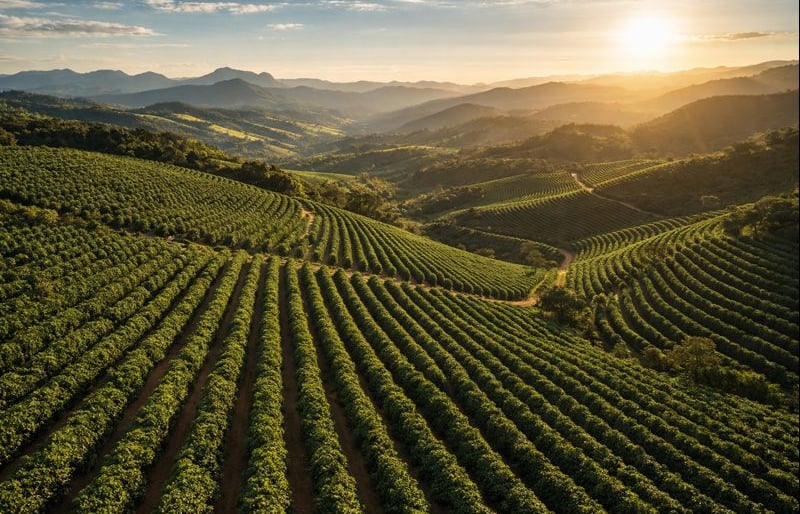
Brazil has ideal conditions that no other country can replicate on the same scale. The tropical highland climate, with well-defined seasons (rain in summer, dry in winter), allows for uniform ripening of the fruits. The vast flat areas of Cerrado Mineiro and Mogiana facilitate efficient mechanization, reducing costs without sacrificing quality.
The privileged latitude (between 15° and 24° south) provides abundant sunshine and moderate temperatures. Altitudes ranging from 400m in Espírito Santo to 1,400m in the mountains of Minas Gerais create diverse microclimates, each producing distinct flavor profiles.
Diversity of Processing: The Brazilian Differential
Brazil popularized the natural method (sun-dried coffee with the cherry intact), which accounts for about 65% of national production. This process gives Brazilian coffees a dense body, low acidity, and chocolatey notes that distinguish them from African or Central American coffees processed via washed method.
In the last 20 years, Brazilian producers have developed the pulped natural (de-pulped) method, a hybrid process that removes the outer skin but retains mucilage during drying. The result: intense sweetness, medium-high body, and a cleaner profile than traditional natural. This method has become the signature of regions like Sul de Minas and Mogiana.
The cereja descascado (Brazilian de-mucilaged/washed) process produces even cleaner coffees, with vibrant acidity and floral or fruity notes, competing in quality with the best Central American coffees.
Economies of Scale and Advanced Technology
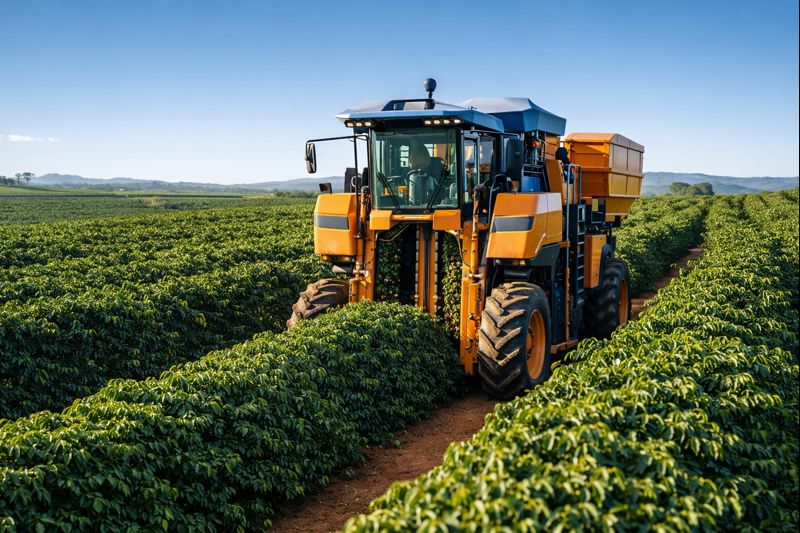
Brazil leads the world in agricultural coffee mechanization. Modern harvesters operate on the flat lands of Cerrado, harvesting up to 600kg of coffee cherries per hour—equivalent to 50-60 manual harvesters. This allows for competitive prices while maintaining quality.
Drip irrigation systems, drones for pest monitoring, automated weather stations, and agricultural management software have transformed Brazilian farms into high-tech operations. At the same time, small producers adopt certified sustainable practices (Rainforest Alliance, UTZ, Organic) to access premium markets.
Main Coffee Producing Regions in Brazil
Minas Gerais: The Heart of Brazilian Coffee
Responsible for over 50% of national production, Minas Gerais is the most important state. The sub-regions present distinct characteristics:
Cerrado Mineiro (Denomination of Origin)
Altitude: 800-1,300m
Predominant processing: Natural and pulped natural
Profile: Dense body, low to medium acidity, caramel and chocolate sweetness, prolonged finish
Typical notes: Milk chocolate, toasted nuts, caramel, peanuts
Peculiarity: The first Brazilian region with DO (Denomination of Origin), ensuring traceability and certified quality
Sul de Minas
Altitude: 700-1,300m
Processing: All methods (natural, pulped natural, washed)
Profile: Versatile and balanced, medium-high body, smooth acidity
Typical notes: Chocolate, caramel, nuts, dried fruits
Peculiarity: The most diverse region, producing from commercial coffees to special microlots rated above 85 points
Mantiqueira de Minas
Altitude: 900-1,400m (the highest in Brazil)
Processing: Predominantly washed and pulped natural
Profile: More pronounced acidity, medium body, complex sweetness
Typical notes: Citrus fruits, caramel, honey, floral notes
Peculiarity: High altitudes create more complex and delicate coffees, similar to Central American ones
Matas de Minas
Altitude: 600-1,200m
Processing: Natural and pulped natural
Profile: Full body, low acidity, characteristic rusticity
Typical notes: Bitter chocolate, spices, wood, sweet tobacco
Peculiarity: Robust coffees ideal for espresso
São Paulo: The Mogiana and Centenary Tradition
Mogiana
Altitude: 900-1,100m
Processing: Pulped natural (local specialty)
Profile: Intense sweetness, velvety body, balanced acidity
Typical notes: Milk chocolate, caramel, nuts, ripe red fruits
Peculiarity: The purple earth soil (extremely fertile) gives a unique sweetness to the coffees
Espírito Santo: Arabica and Conilon
Espírito Santo produces both arabica in the mountains (Caparaó region) and robusta/conilon in the plains. The arabicas from Caparaó, grown between 800-1,200m, have a clean profile with notes of caramel, chocolate, and dried fruits.
Bahia: Innovation in the Baiano Cerrado
The Chapada Diamantina and the Plateau of Bahia are relatively new agricultural frontiers (1970s-80s) that adopted total mechanization and irrigation from the start. Altitudes of 700-1,100m and predominantly natural processing produce coffees with a dense body, low acidity, and excellent sweetness.
Coffee Varieties Grown in Brazil
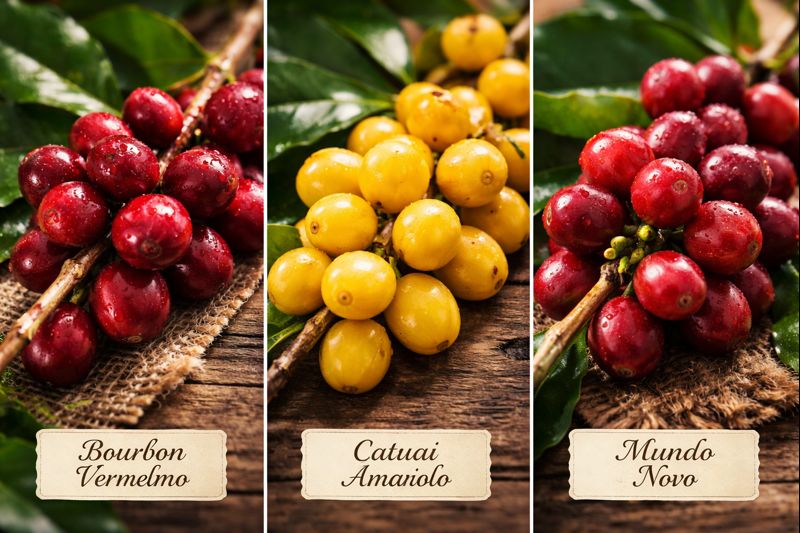
Bourbon: The Classic Variety
Introduced in Brazil in the 19th century from Bourbon Island (now Réunion), this arabica variety produces exceptional quality coffees but with moderate yield. Yellow, red, and even pink (rare) Bourbons are grown in high altitude regions like Sul de Minas and Mogiana. The characteristic profile includes pronounced sweetness, silky body, and mild acidity.
Mundo Novo: The Brazilian Creation
A natural hybrid between Bourbon and Sumatra discovered in São Paulo in the 1940s, Mundo Novo has become the most planted variety in Brazil. It combines high productivity (30-40% higher than Bourbon) with excellent quality, disease resistance, and adaptation to different altitudes. Balanced profile with dense body, caramel sweetness, and chocolatey notes.
Catuaí: Compact and Productive
Developed by IAC (Agronomic Institute of Campinas) in the 1970s, Catuaí is a hybrid between Mundo Novo and Caturra. Compact plants facilitate harvesting (manual or mechanical) and increase planting density. It exists in yellow and red versions, both producing clean, balanced coffees with good sweetness.
Special and Experimental Varieties
Specialized producers cultivate exotic varieties such as Geisha (famous Panamanian cultivar), Acaiá (giant with high productivity), Bourbon Pointu (rare low caffeine mutation), and SL-28 (Kenyan variety). These micro-productions aim for special coffees rated above 85-90 points, reaching premium prices at auctions.
Coffee Production Processes — Comparative Guide
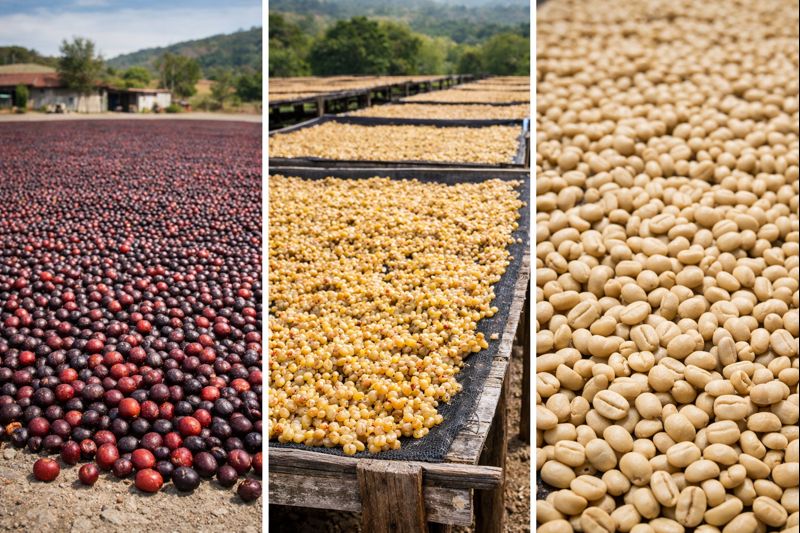
Natural Method (Dry Process): The Brazilian Tradition
Brazil is the world's largest producer of natural coffees. In this method, the picked cherries (ideally ripe) dry whole in the sun on concrete or cement patios, or in suspended systems (african beds). The process takes 15-30 days depending on the weather, with constant turning to avoid unwanted fermentation.
Advantages:
Dense body and velvety texture
Intense sweetness (sugars from the mucilage transfer to the bean)
Notes of chocolate, caramel, dried fruits
Less costly process (does not require water)
Challenges:
Risk of excessive fermentation if poorly managed
Variability in quality (depends on dry weather)
Taste can be "too heavy" for some palates
Pulped Natural (Washed Cherry): The Brazilian Innovation
Developed in Brazil in the 1990s, this hybrid method mechanically removes the outer skin of the cherry while retaining the sugary mucilage during drying. Combines the sweetness of the natural process with the cleanliness of washed coffee.
Process:
Ripe cherries go through a mechanical depulping machine
Beans with mucilage go directly to drying (no fermentation in tanks)
Dry on patios or african beds for 10-20 days
Resulting Profile:
Pronounced sweetness but cleaner than natural
Medium to high body
Acidity more present than natural
Notes of ripe fruits, honey, caramel
Washed/Desmucilado Method: Clarity and Complexity
Less common in Brazil (only 10-15% of production), the washed method produces coffees with a cleaner and more acidic profile. The cherries are depulped, the mucilage is removed through controlled fermentation in tanks (12-48 hours) or mechanically, and the beans are thoroughly washed before drying.
High altitude regions such as Mantiqueira de Minas and Caparaó (ES) specialize in this method, producing coffees with citrus acidity, light-medium body, and floral or fruity notes.
Experimental Processes: Anaerobics and Controlled Fermentations
Specialty coffee producers experiment with anaerobic fermentations (in sealed tanks without oxygen), inoculation of specific yeasts, drying in controlled greenhouses, and carbonic maceration (inspired by wines). These methods produce exotic coffees with unusual profiles (tropical, wine-like, intensely floral) scoring above 88-92 points and sold at specialized auctions.
How to Identify and Buy Quality Brazilian Coffee
Essential Information on the Label
A quality Brazilian coffee should indicate:
Specific region: "Cerrado Mineiro", "Sul de Minas", "Mogiana" (not just "Brazil")
Growing altitude: Generally between 800-1,400m. The higher, the more complex the flavor profile (exception: Cerrado favors processing over altitude)
Processing: Natural, pulped natural, washed. Indicates the expected flavor profile
Variety: Bourbon, Catuaí, Mundo Novo. Optional but demonstrates transparency
SCA Score: Coffees above 80 points are considered "special". Above 85 are exceptional. Above 90 are rare and expensive
Roast: Roast date (ideally less than 30 days) and level (light, medium, dark)
Certifications that Matter
Denomination of Origin (DO) Cerrado Mineiro: Guarantees origin, traceability, and minimum quality standards
Rainforest Alliance / UTZ: Sustainable environmental and social practices
Organic: Certification for production without synthetic agrochemicals
Fair Trade: Minimum price guaranteed to producers
4C (Common Code for Coffee Community): Basic sustainability
Where to Buy Quality Brazilian Coffee in Portugal
Specialized Roasteries: Look for roasteries that indicate specific origin and roast date. Many import micro-lots of Brazilian coffees from competitions such as Cup of Excellence.
Online: Specialized platforms for single origin coffee often offer recent Brazilian harvests with detailed information about the producer, altitude, processing, and tasting notes.
👉 Buy Brazilian coffee on Amazon
Supermarkets: Supermarket coffees rarely indicate specific region or processing, but premium Brazilian brands (Delta, Sical) sometimes sell "single origin" lines with adequate information.
Expected Price Ranges
Commercial Brazilian coffee (generic blend): €8-12/kg Regional origin coffee (Sul de Minas, Cerrado): €15-25/kg Special coffee (above 80 points, recent harvest): €25-40/kg Premium micro-lots (85+ points, rare varieties): €40-80/kg Competition lots (90+ points, Cup of Excellence): €100-300+/kg
How to Prepare Brazilian Coffee: Methods and Recipes
Ideal Roast Profile
Natural and pulped natural Brazilian coffees shine in medium to medium-dark roast (City to Full City). These roasts enhance the dense body, caramel, and chocolate characteristics without burning the natural sugars. Light roast can result in unpleasant citrus acidity that does not harmonize with the coffee's natural profile.
Washed Brazilian coffees from high altitudes (Mantiqueira, Caparaó) work well in medium to medium-light roast, preserving acidity and delicate floral notes.
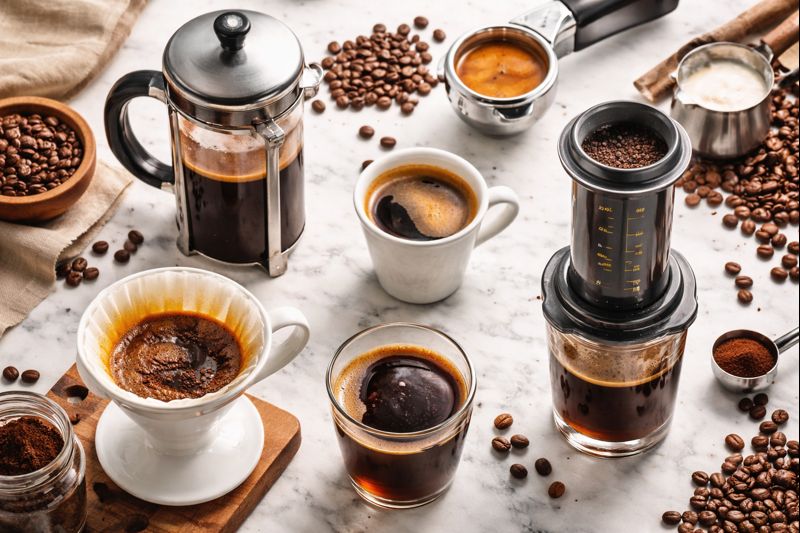
Method 1: French Press (Ideal for Naturals)
The dense body of Brazilian natural coffees pairs perfectly with the rich texture of the French press.
Recipe:
Proportion: 1:14 (more concentrated than the standard 1:15)
Dose: 20g coarsely ground coffee / 280ml water
Temperature: 92-94°C
Time: 4 minutes immersion + 30 seconds slow pressure
Result: Full-bodied coffee with intense chocolate and caramel notes
Method 2: Espresso (Perfect for Brazilian Blends)
Brazil is widely used in espresso blends for its body, sweetness, and abundant crema.
Recipe:
Proportion: 1:2 (traditional Italian)
Dose: 18g finely ground coffee / 36g beverage
Temperature: 92°C
Pressure: 9 bar
Time: 25-30 seconds
Result: Balanced, sweet espresso with dense, persistent crema
Coffees from the Cerrado Mineiro and Mogiana produce exceptional espressos due to their natural body and low acidity.
Method 3: V60 (For Washed High-Attitude Coffees)
Washed coffees from Mantiqueira de Minas benefit from the clarity of the V60.
Recipe:
Proportion: 1:16
Dose: 15g medium-fine ground coffee / 250ml water
Temperature: 94°C
Time: 2:30-3:00 minutes total
Method: Bloom 30s (30ml), then pour in a spiral until 250ml
Result: Clean coffee, citrus acidity, floral notes, and honey
Method 4: Aeropress (Versatile for All Profiles)
Recipe for Brazilian Natural:
Inverted method
17g medium-fine ground coffee / 200ml water at 85°C
Immerse for 1:30, slow pressure for 30 seconds
Result: Sweet concentrated coffee, medium-high body
Brazilian Coffee vs Other Origins: Direct Comparisons
Brazil vs Colombia
Brazil:
Body: Dense and velvety
Acidity: Low to medium
Notes: Chocolate, caramel, nuts
Predominant processing: Natural
Price: Generally more accessible
Colombia:
Body: Medium
Acidity: Medium-high, vibrant
Notes: Red fruits, caramel, citrus
Predominant processing: Washed
Price: Slightly higher
Choose Brazil if: You prefer dense body, low acidity, chocolatey notes
Choose Colombia if: You enjoy vibrant acidity, lighter body, fruity profile
Brazil vs Ethiopia
Brazil:
Profile: Predictable, consistent, full-bodied
Complexity: Moderate
Acidity: Low
Ideal use: Espresso, milk-based drinks
Ethiopia:
Profile: Exotic, variable, delicate
Complexity: High (floral, bergamot, jasmine)
Acidity: High
Ideal use: V60, filtered methods
Choose Brazil if: You want reliable coffee for daily use
Choose Ethiopia if: You’re looking for a unique sensory experience
Brazil vs Kenya
Kenya produces extremely acidic coffees with notes of black currant, tomato, and wine. Brazil is on the opposite end: low acidity, full body, chocolate sweetness. They are practically opposites on the flavor spectrum.
Sustainability and Environmental Challenges
Sustainable Practices Adopted
Brazil is making significant strides in coffee sustainability. Programs like Certifica Minas (origin certification with socio-environmental criteria) and massive adoption of Rainforest Alliance demonstrate a growing commitment.
Techniques such as shading coffee plantations (planting native trees among coffee), composting production waste, rainwater harvesting, solar energy on farms, and reducing agrochemicals are becoming common in modern properties.
Climate Challenges
Global warming severely affects Brazilian coffee farming. Traditionally productive regions face:
Rising average temperatures (arabica coffee prefers 18-24°C)
Irregular rainfall (prolonged droughts or excessive rain during flowering)
Increased pests and diseases (coffee borer, rust)
Producers respond by migrating to higher altitudes (when possible), adopting heat-resistant varieties (such as Obatã and IPR), and investing in precision irrigation.
Environmental and Social Certifications
Organic: It grows slowly in Brazil (still less than 5% of production) due to high costs and technical challenges in controlling pests without chemicals.
Carbon Neutral: Some farms are certifying as carbon neutral by offsetting emissions through reforestation.
Fair Trade: Guarantees a minimum price to producers and premiums for community investment, but penetration in Brazil is limited compared to Colombia or Peru.
Common Mistakes When Buying and Preparing Brazilian Coffee
Mistake 1: Assuming All Brazilian Coffee is the Same
Problem: Buying generic "Brazilian coffee" without specifying region or processing often results in mediocre quality commercial blends.
Solution: Always look for indication of specific region (Cerrado, Sul de Minas, Mogiana) and processing (natural, pulped natural). The quality difference between a generic blend and a Cerrado Mineiro DO is enormous.
Mistake 2: Over-Roasting
Problem: Commercial roasters often roast Brazilian coffee to very dark levels (French roast, Italian roast) to standardize flavor and hide defects, eliminating the coffee’s natural characteristics.
Solution: Prefer medium roast (City, Full City). Ask the roaster or check if the beans still have some shine (oils on the surface indicate very dark roast).
Mistake 3: Preparing Natural Brazilian Coffee as if it Were Washed Coffee
Problem: Using recipes/parameters for V60 optimized for washed coffees (Ethiopia, Kenya) in natural Brazilian coffees can lead to unbalanced extraction—generally under-extracted and acidic.
Solution: For Brazilian naturals in V60, use slightly hotter water (94°C vs 92°C), a slightly finer grind, and a slightly longer time. Or prefer immersion methods (French press, Aeropress).
Mistake 4: Inadequate Storage
Problem: Natural Brazilian coffee, rich in oils, oxidizes quickly if poorly stored, developing a rancid flavor.
Solution: Store in an airtight, opaque container, away from light, heat, and moisture. Consume within 2-3 weeks after opening. Never in the refrigerator (condensation harms the beans).
Mistake 5: Pre-Ground or Too Early Grinding
Problem: Ground coffee loses 60-70% of its aromas in 15 minutes. Buying pre-ground Brazilian coffee or grinding days in advance wastes the bean's potential.
Solution: Grind immediately before preparing. Invest in a basic burr grinder (€30-50)—the difference is dramatic.
Frequently Asked Questions About Brazilian Coffee
Is Brazilian coffee of good quality?
Yes, Brazilian coffee can be of excellent quality. While Brazil produces mass-market commercial coffee, it also cultivates exceptional specialty coffees rated above 85-90 points, competing in quality with the best global origins. Regions like Cerrado Mineiro, Mogiana, and Mantiqueira de Minas produce complex and refined beans. The key is to look for coffees with specific origins and avoid generic commercial blends.
Why is Brazilian coffee cheaper than other specialty coffees?
Brazilian coffee tends to be more affordable due to massive economies of scale, efficient mechanization in flat terrains that lowers harvesting costs, and favorable climate allowing consistent and abundant yields. However, high-scoring Brazilian microlots fetch premium prices similar to Ethiopian or Panamanian coffees. The price reflects quality, not just origin.
What’s the difference between natural and pulped natural Brazilian coffee?
Natural coffee dries with the whole cherry, resulting in a very dense body, intense sweetness, and notes of bitter chocolate and dried fruits. Pulped natural removes the skin before drying but retains the sugary mucilage, producing cleaner sweetness, medium-high body, and slightly higher acidity. Both are
What is Brazil’s position in world coffee production?
Brazil is the largest producer and exporter of coffee in the world, accounting for approximately one-third of global production (e.g., Brazil ~66-69 million bags, ~37-38% of world production). The country has maintained this leadership for over 150 years, mainly growing arabica and robusta (conilon).
What are the major producing regions?
The main Brazilian coffee regions include Minas Gerais (largest producer, especially in Sul de Minas, Cerrado Mineiro, and Zona da Mata), São Paulo (Mogiana), Espírito Santo (largest conilon producer), Bahia (Chapada Diamantina and Planalto), Paraná, and Rondônia.
What is the difference between arabica and robusta coffee?
Arabica coffee has a smoother, more complex flavor with delicate aromatic notes and balanced acidity, being grown at higher altitudes. In contrast, robusta (conilon) has a stronger, more bitter taste, higher caffeine content, is more resistant to pests, and is grown at lower altitudes.
What are the main varieties grown in Brazil?
Among arabica varieties, Bourbon, Mundo Novo, Catuaí, Acaiá, Icatu, and newer varieties like Arara and Catucaí are prominent. In robusta, conilon varieties adapted to the warmer climate dominate.
How to identify quality Brazilian coffee?
Look for information about origin (region, farm), altitude of cultivation, variety, processing method, roast date, and sensory score. Certification seals (like Denomination of Origin) also indicate quality.
Is coffee production in Brazil sustainable?
The sector has made significant advances in sustainable practices, including certifications (Rainforest Alliance, UTZ, Certifica Minas, organic), regenerative agriculture techniques, rational use of water and energy, and social responsibility. Many producers adopt shading, composting, and biological pest control.
Why is coffee so important in Brazilian culture?
Coffee transcends being just a beverage - it is a symbol of hospitality, a pretext for conversations, a break from work, and a social ritual. Serving coffee to visitors is a gesture of welcome deeply rooted in Brazilian culture, representing a moment of human connection present in homes, offices, and establishments throughout the country.
Does Brazilian coffee have health benefits?
Studies indicate that moderate coffee consumption (3 to 4 cups daily) offers benefits: antioxidants, reduced risk of type 2 diabetes, protection against neurodegenerative diseases, improvement in cognitive function, and physical performance. Quality Brazilian coffee preserves these beneficial compounds.
How much caffeine does Brazilian coffee have?
Brazilian arabica coffee contains approximately 80-100mg of caffeine per 150ml cup, while robusta can have 150-200mg. The amount varies depending on the variety, roast, and preparation method.
Conclusion
Brazilian coffee represents much more than an agricultural commodity - it is cultural heritage, an economic motor, and a symbol of national identity. From the humble cup of morning coffee to microlots scored above 90 points competing in world championships, Brazil demonstrates versatility and excellence in coffee production. The diversity of Brazilian coffee is its greatest strength, offering everything from the chocolatey notes of naturale from Cerrado to the floral nuances of washed coffees from Mantiqueira, with a sensory profile for all palates.
The future of Brazilian coffee balances tradition and innovation, maintaining the efficiency that ensures global volume while deepening the commitment to quality, sustainability, and valuing the producer. Sipping a cup of Brazilian coffee connects us with history, geography, and the work of generations of coffee growers. In an increasingly fast-paced world, Brazilian coffee retains its power to create pauses, connections, and simple yet profound moments of pleasure - it invites connection, knowledge, and conscious enjoyment, where all are welcome.
Additional Resources
Useful Tools:
Coffee and Water Calculator — Calculate exact proportions for any amount
Related Articles:
Contact
Contact us for questions or suggestions.
© 2026. All rights reserved.
Information