


Ethiopian Coffee: A Complete Guide to the Beans from the Homeland of Coffee
Discover Ethiopian coffee: regions like Yirgacheffe, Sidamo, and Harrar, natural and washed brewing methods, floral and fruity flavors, how to prepare it, and how to choose quality coffee.
SINGLE-ORIGIN COFFEES
Mario S.
1/18/202616 min read

The Fascinating History of Ethiopian Coffee
Ethiopia is not just another coffee-producing country — it is literally the place where it all began. According to the best-known legend, a goat herder named Kaldi, in the 9th century, noticed that his animals became particularly energetic after consuming certain red berries. This casual discovery in the Ethiopian highlands gave rise to one of the most consumed beverages on the planet.
Scientifically, Coffea arabica is native to the tropical forests of Ethiopia, specifically in the mountainous regions of the southwest of the country. Unlike other producing countries that received coffee plants through colonization or trade, Ethiopia has wild varieties that have been growing naturally for thousands of years.
The Coffee Ceremony: A Living Tradition
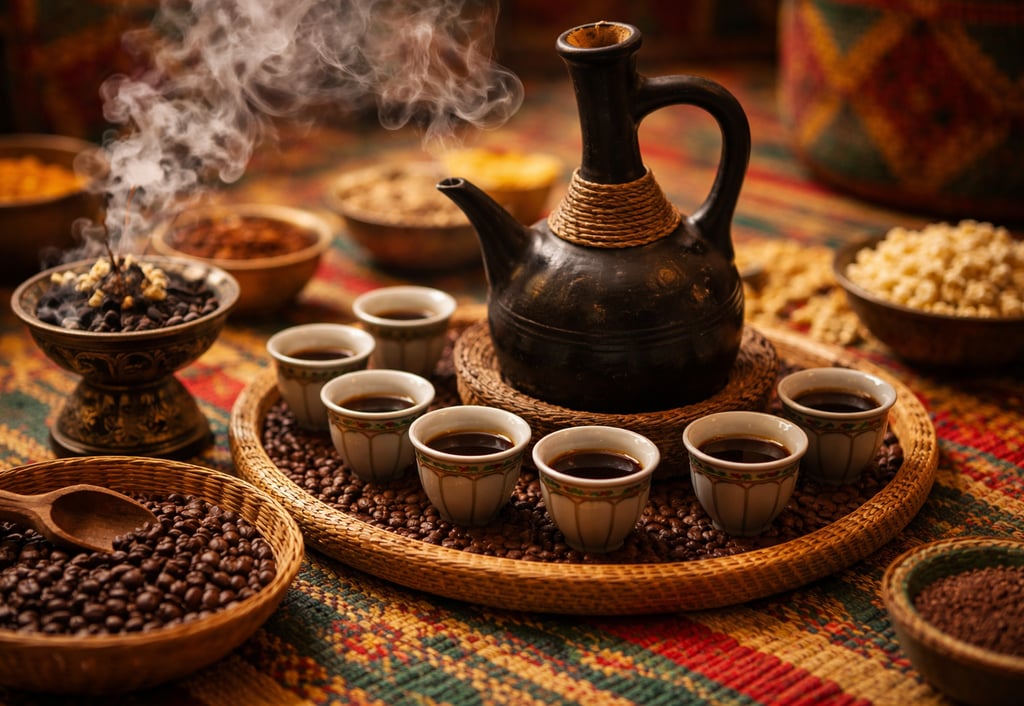
In Ethiopia, coffee transcends the function of a simple beverage. The traditional Ethiopian coffee ceremony ("buna") is a social ritual that can last up to three hours, representing hospitality, respect, and community. The hostess roasts the green beans in a small pan over embers, grinds them manually, and prepares the coffee in a jebena (traditional ceramic pot).
This process is not just symbolic — it reveals the deep cultural connection between the Ethiopian people and coffee, a relationship that remains intact through generations. About half of the national coffee production is consumed internally, demonstrating that coffee is part of Ethiopian national identity.
Main Coffee Producing Regions and Their Unique Profiles
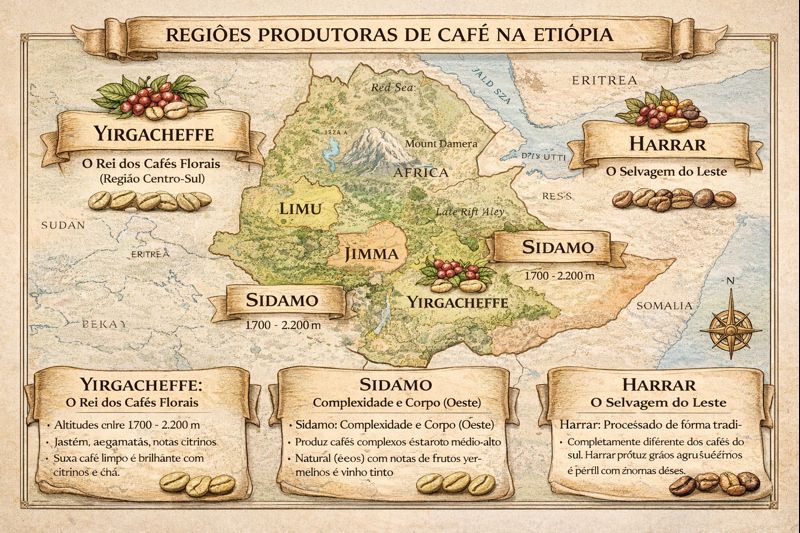
Yirgacheffe: The King of Floral Coffees
Considered by many experts to be the most prestigious coffee-producing region in Ethiopia, Yirgacheffe is situated at altitudes between 1,700 and 2,200 meters. The coffee from this region is distinguished by its intense floral profile, with notes of jasmine, bergamot, and sometimes even a wine aroma.
Yirgacheffe beans are predominantly processed using the washed method, resulting in a clean, bright beverage with vibrant acidity. It is common to find notes of citrus, earl grey tea, and honey in these coffees. Local producers, often small farmers with less than two hectares, cultivate endemic varieties that do not exist anywhere else in the world.
Sidamo: Complexity and Body
The Sidamo region (officially Sidama since 2020) produces coffees known for their complexity and medium-high body. Located south of Yirgacheffe, this area offers profiles that vary significantly depending on altitude and processing method.
Natural (dry) coffees from Sidamo present notes of ripe red fruits, red wine, and spices, while the washed versions tend toward citrus, peach, and caramel. The diversity of terroir within this single region is impressive, with micro-lots showcasing distinct characteristics.
Harrar: The Wild East
Completely different from the southern coffees, Harrar exclusively produces beans through the natural method, processed in the dry highlands of eastern Ethiopia. This coffee is distinguished by its wild and unpredictable character, with notes that can include fermented blueberries, dark chocolate, red wine, and sometimes even earthy hints.
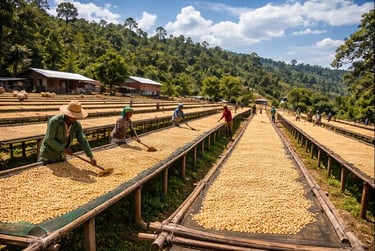
Harrar is processed traditionally, with the beans dried on terraces or raised beds for 2-3 weeks under intense sun. This ancient method gives the beans a flavor profile that enthusiasts describe as "funky" or "wine-like" — characteristics that divide opinions but capture the hearts of true aficionados.
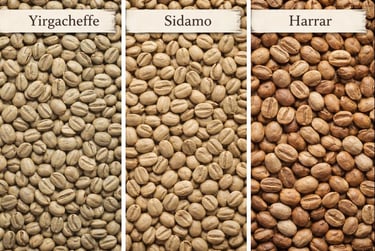
Endemic Varieties: The Ethiopian Genetic Treasure
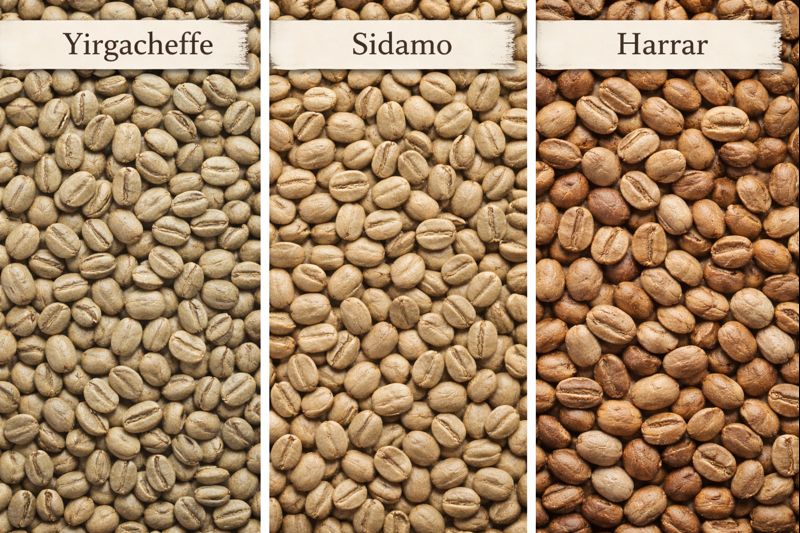
One of the most extraordinary characteristics of Ethiopian coffee is its unparalleled genetic diversity. While other countries cultivate specific and cataloged varieties (such as Bourbon, Typica, or Caturra), Ethiopia literally has thousands of native varieties, many of which are still not studied or scientifically classified.
The Concept of "Heirloom"
When you see "Ethiopian Heirloom" on a coffee package, it does not refer to a specific variety, but rather to a set of local varieties passed down through generations. It is an umbrella term that encompasses hundreds of native cultivars, each adapted to its specific microclimate.
This genetic diversity represents not only cultural value but also scientific and economic importance. Researchers believe that these wild varieties may contain valuable genes for resistance to pests, adaptation to climate change, and development of new flavor profiles.
Semi-Wild Varieties from the Forests
About 10-15% of Ethiopian coffee is still harvested from semi-wild or completely wild plants that grow in tropical forests. These "forest" coffees grow under the natural shade of native trees, with no significant human intervention other than harvesting.
Forest coffees tend to present more complex and sometimes surprising profiles, resulting from natural competition with other plants and interaction with the complete forest ecosystem. They are the coffees closest to those that Kaldi might have encountered over a thousand years ago.
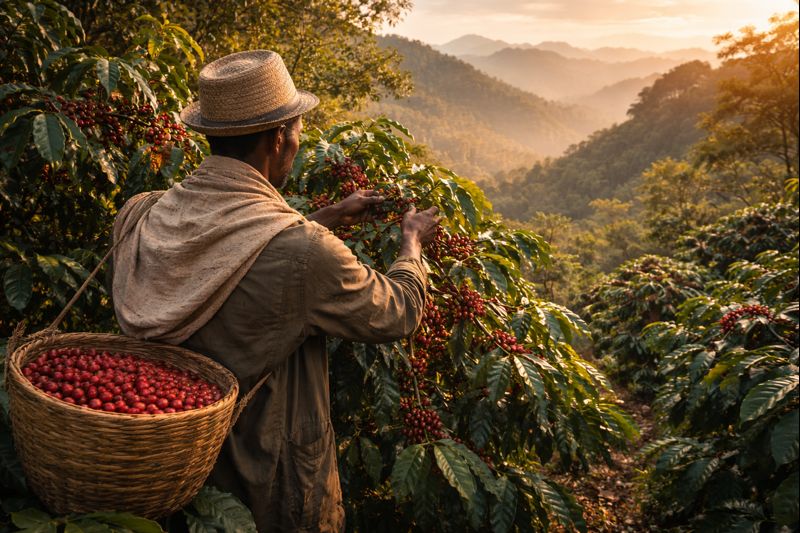
Processing Methods: Natural vs Washed
Coffee processing — the way the cherry is transformed into green bean — has a tremendous impact on the final flavor profile. Ethiopia primarily employs two methods, each producing distinct characteristics.
Natural Processing (Dry)
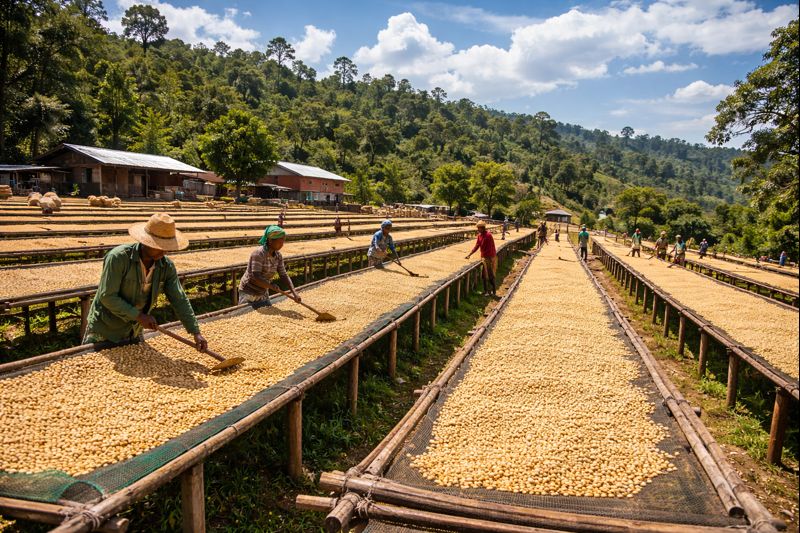
The natural method is the oldest and still dominant technique in Ethiopia, especially in regions like Harrar and parts of Sidamo. After harvesting, whole cherries are spread out on elevated African beds or terraces, where they dry in the sun for 15-30 days.
During this period, the fruit's pulp naturally ferments around the bean, transferring sugars and aromatic compounds. The result is a coffee with a fuller body, intense sweetness, and pronounced fruity notes — think of red fruits, mango, red wine, and sometimes chocolate.
Natural processing requires a dry and sunny climate, as well as constant turning of the cherries to avoid excessive fermentation or mold development. When done well, it produces some of the most memorable coffees in the world.
Washed Processing
Introduced more recently in Ethiopia (in the last few decades), the washed method has become popular in Yirgacheffe and other regions with access to abundant clean water. The cherries are stripped of their pulp through machinery, the beans ferment in water tanks for 12-72 hours to remove the remaining mucilage, and then they dry on raised beds.
This method results in a cleaner, brighter cup with pronounced acidity. Ethiopian washed coffees are known for their delicate floral notes (jasmine, bergamot), vibrant citrus, and complex yet defined aromatic profile.
Honey and Experimental
Some Ethiopian producers have begun to experiment with honey (mel) methods and anaerobic processing, inspired by techniques from Central America. These hybrid methods produce unique profiles that combine the cleanliness of washed with some of the sweetness and body of natural.
How to Choose and Buy Quality Ethiopian Coffee
Navigating the world of Ethiopian coffee can seem intimidating given the diversity of options. However, some objective criteria help identify quality and value.
Essential Information on the Label
A premium Ethiopian coffee should provide specific information:
Origin Region: Look for specific denominations such as Yirgacheffe, Guji, Sidama, or Harrar instead of simply "Ethiopia". Single-origin coffees usually indicate greater quality control.
Growing Altitude: Coffees grown above 1,800 meters (designated "Strictly High Grown") develop greater density and complexity. The altitude is often expressed in meters above sea level (m.a.s.l.).
Grading Scale: The Ethiopian system classifies coffees from 1 to 5 (or 9 in the older system), with grade 1 being the highest. This classification is based on the number of defects per sample — the lower the number, the better the quality.
Processing Method: The indication "natural", "washed", or "honey" allows you to anticipate the flavor profile and choose according to your preferences.
Roast Date: Fresh coffee is essential. Look for beans roasted less than 4-6 weeks ago for the best experience. Once opened, consume within 2-3 weeks.
Appropriate Roast Profile
Ethiopian coffees especially shine in light to medium roasts. A roast that is too dark masks the delicate floral and fruity profiles that make these coffees special. For Yirgacheffe, prefer light roasts that preserve the bright acidity and floral notes. For Sidamo and Harrar, medium roasts can balance acidity with greater body development.
Avoid Ethiopian coffees in French or Italian roast — you are basically paying a premium price for characteristics that will be destroyed by excessive roasting.
Where to Buy
Specialized roasters in single-origin coffees generally offer better quality than supermarkets. Look for establishments that provide detailed information about origin, processing, and flavor profile. Many premium roasters now sell online with fast shipping, ensuring freshness.
Consider also coffee subscriptions that regularly include Ethiopian origins — allowing you to try different regions and processing methods without a large initial investment.
How to Prepare Ethiopian Coffee for Maximum Flavor
The quality of Ethiopian beans deserves careful preparation that respects and enhances their unique characteristics. Different extraction methods highlight different aspects of the flavor profile.
Filtered Methods (Pour Over)
Devices like V60, Chemex, or Kalita Wave are ideal for washed Ethiopian coffees from Yirgacheffe. These methods produce a clean cup that allows you to fully appreciate the vibrant acidity and delicate floral notes.
Recommended recipe for V60:
Ratio: 1:16 (15g of coffee for 240ml of water)
Water temperature: 92-94°C
Grind: medium-fine (similar to fine table salt)
Total time: 2:30-3:00 minutes
Start with a pre-infusion of 30-45 seconds (using double the weight of coffee in water), then add the rest in smooth circular motions. The resulting cup should show clarity, complexity, and a clean finish.
French Press for Natural Coffees
Natural coffees from Sidamo or Harrar benefit from the full extraction provided by the French press. This method allows the natural oils to remain in the drink, creating a fuller body and velvety texture.
Recommended recipe:
Ratio: 1:15 (20g for 300ml)
Temperature: 93-95°C
Grind: coarse (similar to coarse breadcrumbs)
Brewing time: 4 minutes
The French press reveals the fruity sweetness and red wine notes characteristic of Ethiopian naturals, producing a more robust sensory experience.
👉 See the French Press price on Amazon
Espresso with Ethiopians
Although less common than for Italian blends, Ethiopian coffee can produce extraordinarily complex espressos. Washed Yirgacheffe coffees create vibrant and floral shots, while Sidamo naturals produce intensely fruity espressos.
Suggested parameters:
Dose: 18-20g (double basket)
Yield: 36-40g in 25-30 seconds
Temperature: 91-93°C
Pressure: 9 bars
Many third wave baristas use single-origin Ethiopian coffees for innovative espressos that challenge traditional expectations.
👉 See the complete Espresso review
The Importance of Water
The quality of the water accounts for 98% of the final beverage. Water that is too mineralized or chlorinated compromises the delicate flavors of Ethiopian coffee. Use filtered water with moderate mineralization (TDS between 75-150 ppm) for optimal results.
Flavor Profiles: What to Expect in Each Cup
Understanding the flavor descriptors helps you choose coffees aligned with your preferences and fully appreciate the complexity of what you are drinking.
Floral Notes
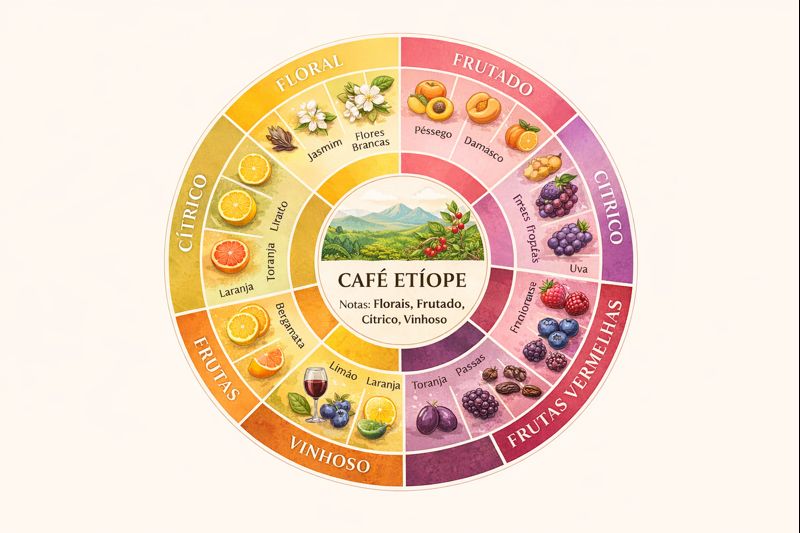
Washed coffees from Yirgacheffe are famous for their intense floral notes — jasmine, bergamot, lavender, and sometimes even roses. These characteristics result from specific aromatic compounds developed during growth at high altitudes and preserved through washed processing.
When tasting, take a deep breath of the aroma before sipping. The floral notes are often more evident on the nose than on the palate, creating a complex aromatic experience.
Brilliant Acidity
Acidity in coffee is not a flaw — it is a desirable characteristic that provides liveliness and complexity. Ethiopian coffees, especially the washed ones, exhibit acidity that can remind you of Meyer lemon, lime, green apple, or sometimes even white wine.
This acidity should be balanced and pleasant, never aggressive or bitter. A well-integrated acidity creates the "brilliance" that professionals value so much.
Fruity Sweetness in Naturals
Natural coffees develop intense sweetness and notes of red fruits — strawberries, raspberries, blueberries — as a result of the natural fermentation of the fruit pulp surrounding the bean. In Harrar, this characteristic can evolve into more complex profiles reminiscent of fermented fruits or red wine.
Natural sweetness (not added) is a sign of well-cultivated and processed coffee. It should be evident without the need for added sugar.
Body and Texture
The body refers to the tactile sensation of coffee in the mouth. Washed coffees tend to have a light-medium body with a silky texture, while naturals display a medium-full body with a more velvety or creamy texture.
This characteristic significantly influences the overall experience — a washed Yirgacheffe seems to "dance" on the tongue, while a natural Sidamo "embraces" the palate.
Common Mistakes When Buying and Preparing Ethiopian Coffee
Even experienced enthusiasts make mistakes that compromise the quality of the experience. Avoiding these problems ensures you get the most out of the premium beans you have purchased.
Mistake 1: Buying Ground Coffee
Ethiopian coffee rapidly loses its delicate aromatic characteristics after grinding. The volatile compounds responsible for the floral and fruity notes dissipate within hours. Always buy whole beans and grind immediately before brewing.
Investing in a quality grinder (burr grinder) makes a dramatic difference. Blade grinders produce uneven particles, resulting in uneven extraction and muddled flavors.
Mistake 2: Overly Hot Water
Many users boil water and then immediately add it to coffee. Water at 100°C over-extracts the beans, especially light-roasted Ethiopians, producing undesirable bitterness that masks the delicate flavors.
Let the water rest for 30-60 seconds after boiling, or use a kettle with temperature control for precision. The ideal temperature is between 91-95°C, depending on the method.
Mistake 3: Incorrect Ratio
"Weak coffee" does not do justice to premium beans. Many people use inadequate ratios (1:20 or more diluted), producing a drink lacking intensity or complexity.
Use a digital scale for consistency. The ratio of 1:15 to 1:16 works well for most methods. Adjust according to personal preference, but maintain consistency to evaluate differences between coffees.
Mistake 4: Improper Storage
Exposure to air, light, heat, or moisture quickly degrades coffee. Storing beans in inadequate containers or in the refrigerator (a common mistake!) compromises quality.
Store in a sealed, opaque container in a cool, dry place. Avoid refrigerators — condensation damages the beans. Buy quantities you can consume within 3-4 weeks after opening.
Mistake 5: Ignoring Equipment Cleaning
Residual rancid oils accumulated in the grinder or coffee maker contaminate each new brew. This problem is especially noticeable with delicate coffees like Ethiopians.
Clean the grinder weekly and the brewing equipment after each use. Oxidized oils produce a bitter and unpleasant flavor that no premium bean can overcome.
Mistake 6: Inadequate Roasting for the Profile
Choosing dark roasts for a Yirgacheffe wastes the coffee's potential. The floral and fruity characteristics completely disappear in French or Italian roasts.
For washed Ethiopian coffees, prefer light or medium-light roasts. For natural coffees, medium works well. Save dark roasts for origins that benefit from that profile (like robustas or some Brazilian coffees).
The Economic and Social Impact of Coffee in Ethiopia
Coffee is not just an export product — it is a fundamental pillar of the Ethiopian economy and society. Understanding this context adds depth to the appreciation of each cup.
Livelihood of Millions
Approximately 15 million Ethiopians rely directly on the coffee production chain for their livelihood — about 15% of the total population. Most are smallholder farmers with plots of less than two hectares, growing coffee alongside other crops for food security.
Coffee accounts for about 30% of Ethiopia's total exports and more than 60% of agricultural exports, generating hundreds of millions of dollars annually in critical foreign exchange revenues for the national economy.
Challenges for Producers
Despite the premium reputation of Ethiopian coffee in international markets, many farmers receive a minimal fraction of the final value. The chain of intermediaries between farm and consumer often captures most of the added value.
Moreover, climate change threatens production. Rising temperatures and erratic rainfall force farmers to shift crops to higher altitudes, reducing the available area for coffee cultivation.
Certifications and Fair Trade
Looking for coffees with certifications like Fair Trade, Rainforest Alliance, or Direct Trade helps ensure that a greater percentage of the price paid reaches producers. Many specialty roasters establish direct relationships with Ethiopian cooperatives, paying premium prices in exchange for consistent quality.
These direct partnerships benefit both parties: farmers receive fair compensation and an incentive to invest in quality, while roasters secure access to exceptional micro-lots.
The Role of Cooperatives
Producer cooperatives play a crucial role in Ethiopia, aggregating the production of small farmers, providing access to processing stations, negotiating better prices, and facilitating access to international markets.
Famous cooperatives like Yirgacheffe Coffee Farmers Cooperative Union (YCFCU) have become globally recognized brands, representing hundreds of small producers and ensuring consistent quality.
Future Trends and Innovations
The world of Ethiopian coffee is not static — producers and exporters continue to innovate, creating new opportunities and challenges.
Experimental Processing
Inspired by techniques from Central America and Asia, some Ethiopian producers are experimenting with anaerobic processing (fermentation in sealed tanks without oxygen), controlled prolonged fermentations, and honey methods.
These experimental processes produce entirely new flavor profiles — some anaerobic Ethiopian coffees present intense tropical notes (pineapple, mango, passion fruit) rarely associated with the origin. Although controversial among purists, they significantly expand the palette of available flavors.
Blockchain Traceability
Some Ethiopian exporters have begun to use blockchain technology to track coffee from the farm to the final consumer. This total transparency allows consumers to verify authenticity, precise origin, and sustainability practices.
The technology also combats fraud — unfortunately, some coffee sold as "Ethiopian Yirgacheffe" does not actually come from that region. Blockchain can verify provenance indisputably.
Climate Adaptation
In the face of climate change, researchers are working with farmers to develop resilient practices: agroforestry systems that provide natural shade, heat-resistant varieties, and water conservation techniques.
Some traditionally too hot regions for Arabica may become viable, while classic areas face challenges. Preserving the genetic diversity of wild varieties may provide essential genetic resources for future adaptation.
Growing Domestic Market
An emerging urban middle class in Ethiopia is starting to value specialty coffee, creating a sophisticated domestic market. New cafes in Addis Ababa serve locally sourced single origins prepared with modern methods, combining tradition with innovation.
This development could eventually retain greater economic value within the country, rather than exporting green beans for roasting and sale in other markets.
Frequently Asked Questions about Ethiopian Coffee
What makes Ethiopian coffee different from other coffee around the world?
Ethiopian coffee is unique because Ethiopia is the natural cradle of Coffea arabica. The country has thousands of endemic varieties, many of them wild or semi-wild, that do not exist anywhere else in the world. This genetic diversity results in extremely complex coffees, with unparalleled floral, fruity, and wine-like notes.
What is the best region in Ethiopia for specialty coffee?
There is no single "best" region — it all depends on the desired flavor profile:
Yirgacheffe: floral, delicate coffees, with bright acidity and notes of jasmine and bergamot.
Sidamo (Sidama): a balance between body, sweetness, and complexity, with variation between washed and natural coffees.
Harrar: intense natural coffees, with wine-like notes, fermented red fruits, and wild character.
Each region offers a distinct sensory experience.
What does "Ethiopian Heirloom" mean on the coffee label?
"Ethiopian Heirloom" does not refer to a specific variety but to a set of traditional local varieties passed down through generations. It is an umbrella term that encompasses hundreds of native cultivars adapted to specific microclimates, responsible for the enormous diversity of flavors found in Ethiopian coffee.
What is the difference between natural and washed Ethiopian coffee?
The difference lies in the processing method:
Natural coffee (dry): the whole cherry dries in the sun, resulting in coffees with fuller body, intense sweetness, and notes of red fruits, wine, and chocolate.
Washed coffee: the pulp is removed before drying, producing a cleaner cup, with vibrant acidity and well-defined floral and citrus notes.
Both are excellent — the choice depends on personal preference.
What is the difference between Ethiopian and Colombian coffee?
Ethiopian coffees are characterized by intense floral notes, bright acidity, and fruity profiles (especially the naturals), while Colombian coffees tend to be more balanced, with notes of caramel, nuts, and chocolate. Ethiopia extensively uses natural processing, while Colombia favors the washed method. Genetically, Ethiopia has thousands of endemic varieties, while Colombia mainly cultivates Caturra, Castillo, and similar varieties.
What is the best preparation method for Ethiopian coffee?
It depends on the region and processing of the coffee:
Washed Yirgacheffe coffees shine in filtered methods like V60, Chemex, and Kalita Wave.
Natural Sidamo or Harrar coffees work very well in the French press, enhancing body and sweetness.
Ethiopian coffees can also produce complex and aromatic espressos, especially in light to medium roasts.
What is the ideal roast for Ethiopian coffees?
Ethiopian coffees shine in light to medium roasts. Very dark roasts mask the floral, fruity notes, and the natural acidity that make these coffees special. For Yirgacheffe, prefer light roasts; for Sidamo and Harrar, medium roasts tend to work better.
How to identify high-quality Ethiopian coffee on the label?
A high-quality Ethiopian coffee should clearly indicate:
Specific region (Yirgacheffe, Sidamo, Harrar, Guji, etc.)
Cultivation altitude (ideally above 1,800 meters)
Grade classification (Grade 1 is the highest)
Processing method
Recent roast date (within 4–6 weeks)
This information demonstrates traceability and quality control.
Is Ethiopian coffee sustainable and ethical?
Much of Ethiopian coffee is produced by small farmers, often in traditional agroforestry systems. Choosing coffees with certifications (Fair Trade, Rainforest Alliance) or from direct trade helps ensure better compensation for producers and more sustainable practices throughout the supply chain.
Does Ethiopian coffee have more caffeine than others?
Not significantly. Caffeine content depends mainly on the species (arabica vs robusta) and preparation method, rather than geographic origin. Ethiopian coffee is exclusively arabica, which contains less caffeine (1.2-1.5%) compared to robusta (2.2-2.7%). A cup of Ethiopian coffee contains approximately 80-120mg of caffeine, similar to other arabicas. Factors like roast (darker = slightly less caffeine) and preparation method have a greater impact.
Conclusion: Why Ethiopian Coffee is a Unique Experience
Ethiopian coffee is not just a beverage — it is a living connection to the origin of coffee, to the history, culture, and biodiversity that shaped everything we know today as specialty coffee. From the ancestral forests where Coffea arabica grows naturally to the cups carefully prepared by modern baristas, each Ethiopian bean carries centuries of tradition and innovation.
The incomparable genetic diversity, traditional and experimental processing methods, and flavor profiles ranging from delicate floral to intense fruity make Ethiopian coffee an absolute reference in the coffee world. More than simply choosing a product, opting for Ethiopian coffee is about valuing origin, people, and authenticity.
Whether you are a curious beginner or an experienced connoisseur, exploring the coffees of Ethiopia is a sensory journey that rewards attention, respect, and curiosity — exactly how coffee deserves.
☕ A cup of Ethiopian coffee tells more than just a story. It is the very origin of the coffee story.
Additional Resources
Useful Tools:
Coffee and Water Calculator — Calculate exact proportions for any amount
Related Articles:
Contact
Contact us for questions or suggestions.
© 2026. All rights reserved.
Information